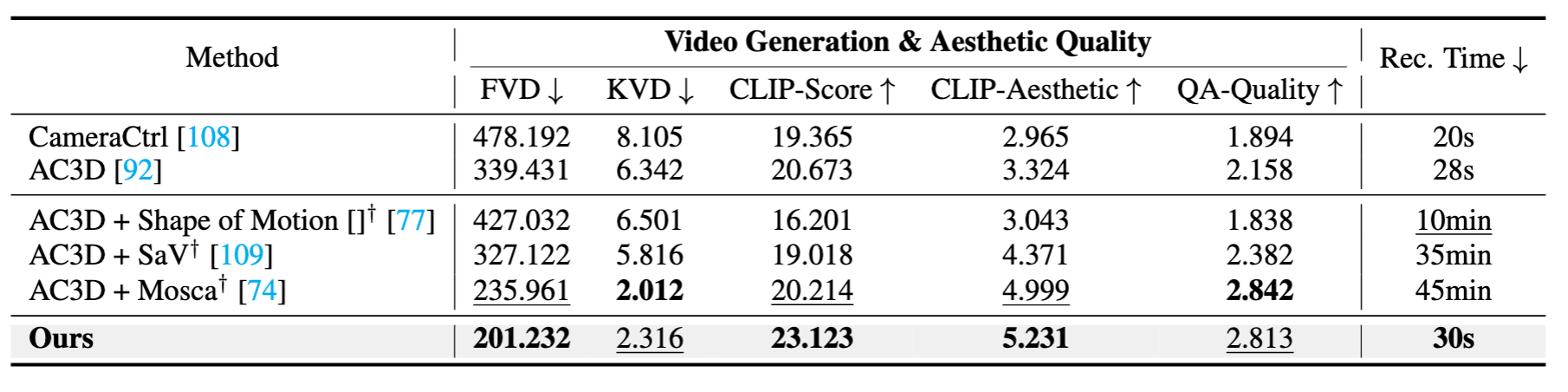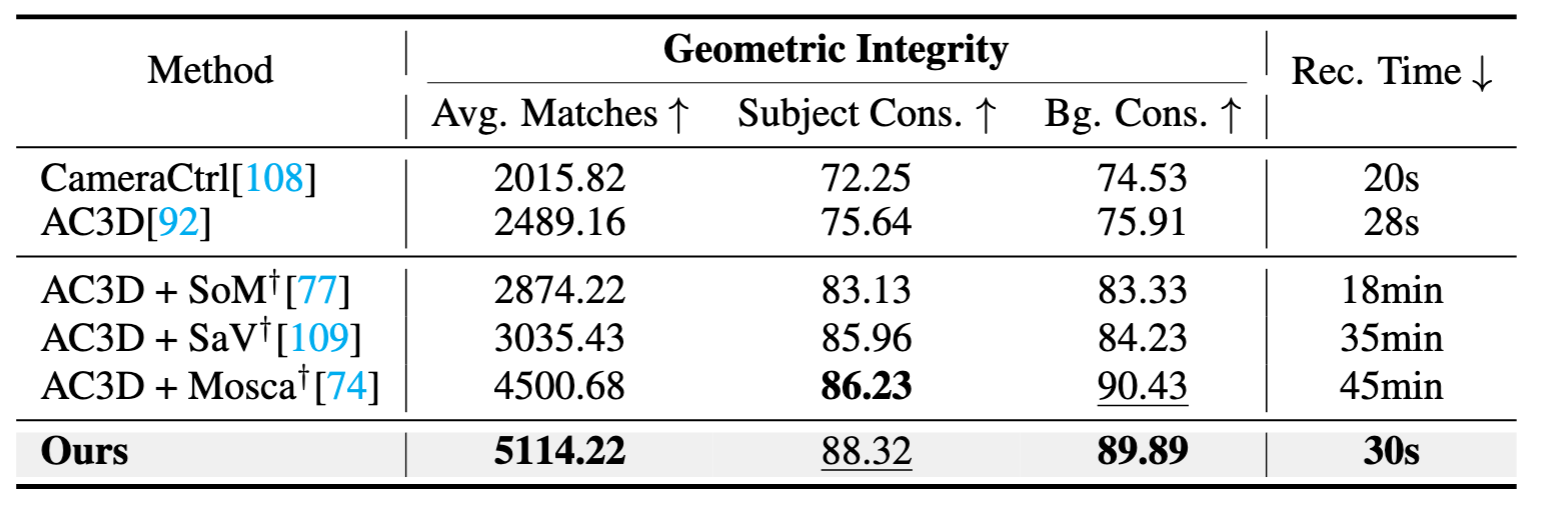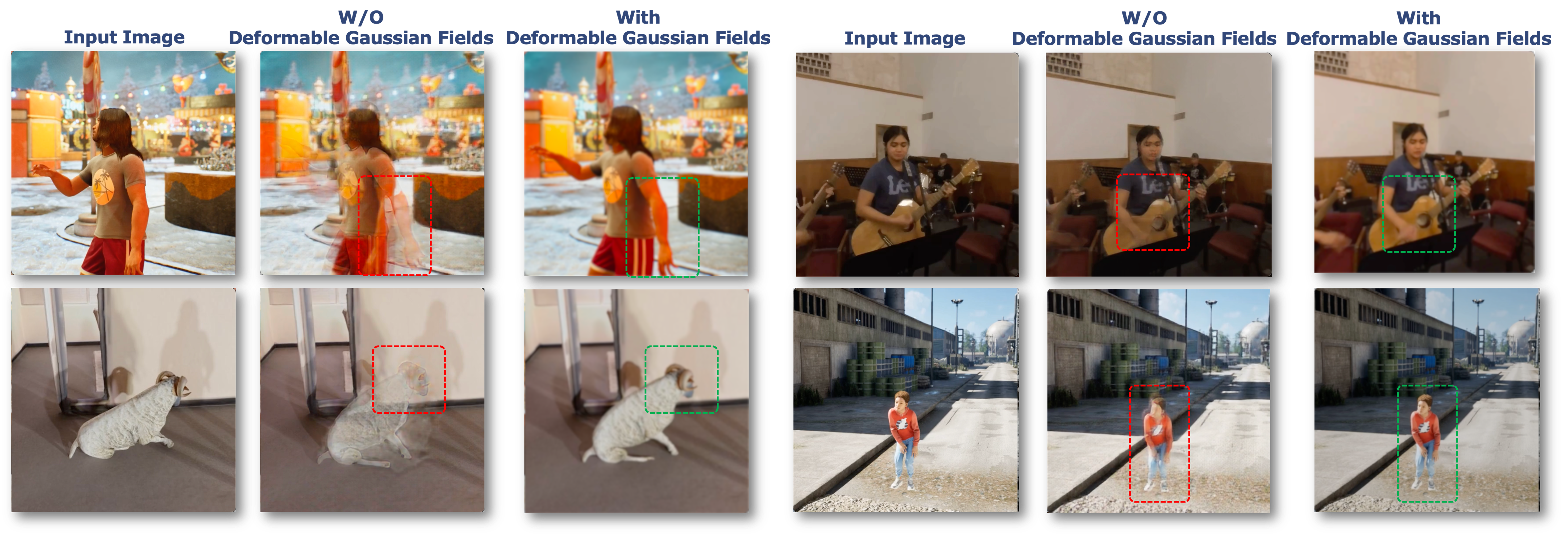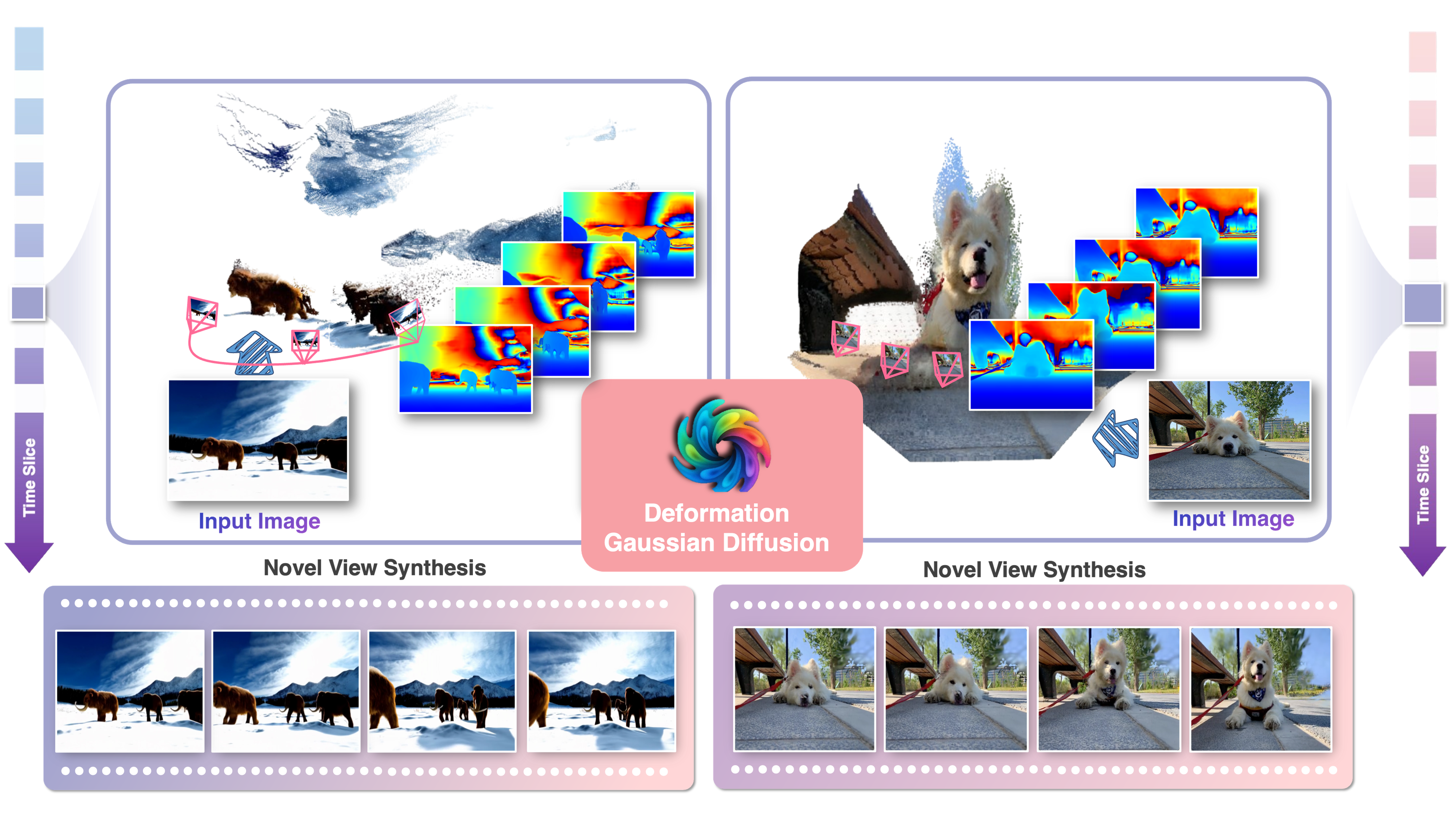
We introduce Diff4Splat, a feed-forward framework for controllable 4D scene generation from a single image. Our method synergizes the powerful generative priors of video diffusion models with geometric and motion constraints learned from a large-scale 4D dataset. Given a single image, camera trajectory, and optional text prompt, our model directly predicts a complete, dynamic 4D scene represented by deformable 3D Gaussian Splats. This approach captures appearance, geometry, and motion in a single pass, eliminating the need for test-time optimization or post-hoc processing. At the core of our framework is a video latent transformer that enhances existing video diffusion models, enabling them to jointly model spatio-temporal dependencies and predict 3D Gaussian Splats over time. Supervised by objectives targeting appearance fidelity, geometric accuracy, and motion consistency, Diff4Splat achieves performance comparable to state-of-the-art optimization-based methods for dynamic scene synthesis while being significantly more efficient.
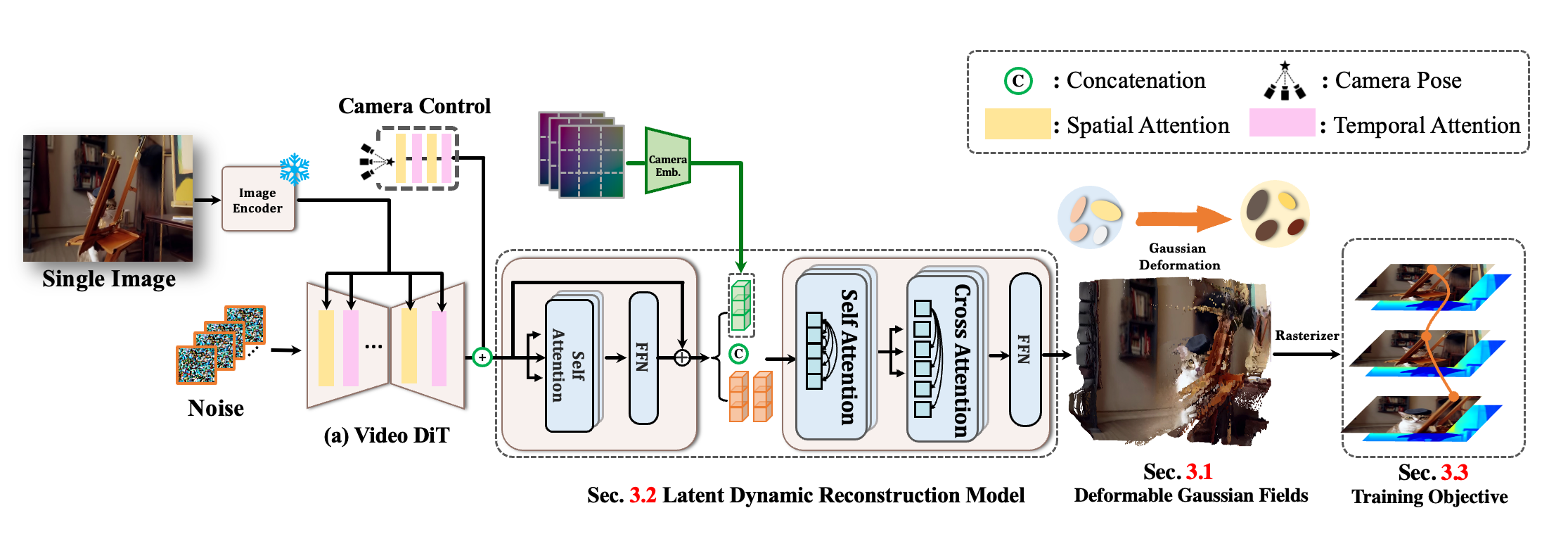
The network architecture of Diff4Splat. We present a high-fidelity 4D scene generation method from single images through four key innovations: video diffusion latents processed by our novel Transformer enabling dynamic 3DGS deformation, unified supervision with photometric, geometric, and motion losses, and progressive training for robust geometry and texture.
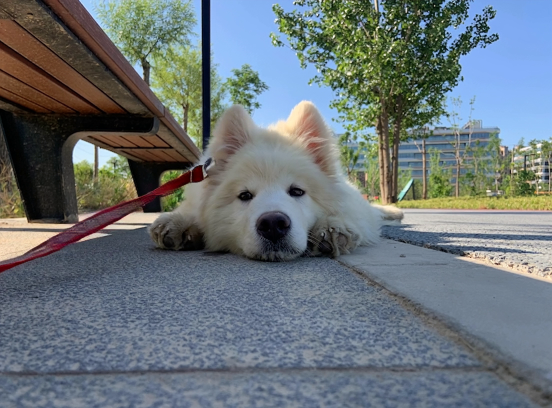
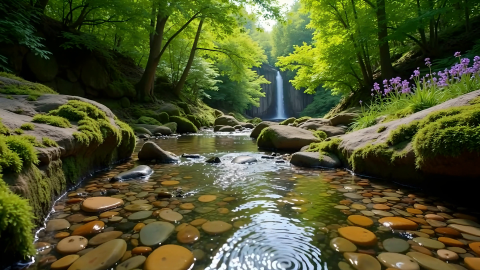
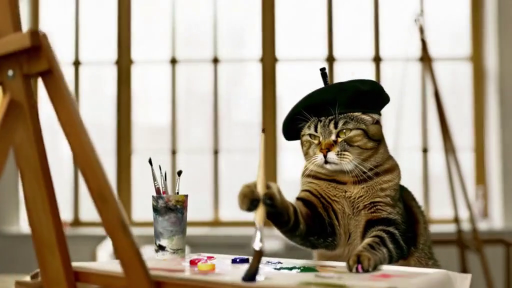
| Input Image | Ours (feed-forward) | MoSca (test-time optimization) |
 |
||
 |
||
 |
||
 |
||
 |
||
 |
If you find our work helpful, please consider citing:
      @article{pan2025diff4splat,
        title={Diff4Splat: Controllable 4D Scene Generation with Latent Dynamic Reconstruction Models},
        author={Pan, Panwang and Lin, Chenguo and Zhao, Jingjing and Li, Chenxin and Lin, Yuchen and Li, Haopeng and Yan, Honglei and Wen, Kairun and Lin, Yunlong and Yuan, Yixuan and others},
        journal={arXiv preprint arXiv:2511.00503},
        year={2025}
      }